The startup journey often begins with a grand vision, but the path to realizing it is rarely a straight line. Many founders burn through precious time and capital chasing perfection, only to discover too late that their meticulously crafted product doesn't resonate with users. This is where Bootstrapping & Minimal Viable Product Development fuels startup growth, offering a lean, agile alternative to the traditional, often resource-intensive, approach. It's about building smart, learning fast, and adapting even faster.
Forget the days of year-long development cycles and multi-million-dollar seed rounds before launch. Today’s startup landscape, especially as we look to 2025, champions speed, efficiency, and real-world validation. If you're building a new venture, understanding how to launch with minimal resources and maximum impact isn't just an advantage—it's foundational to survival and scalable success.
At a Glance: Your Blueprint for Lean Startup Success
- Start Small, Learn Big: Develop a basic product version (MVP) with only essential features to quickly gather user feedback.
- Validate Demand Early: Never scale without first confirming real user interest to avoid costly failures.
- Embrace 2025 Trends: Leverage AI-driven solutions (chatbots, UX), lean methodologies, and digital-first funding models.
- Build Fast: Modern tools and approaches mean MVPs can be built in weeks, not months.
- Prioritize Feedback: Your MVP should evolve based on actual user data, not internal assumptions.
- Pitch Smart: Use simple visuals, compelling storytelling, and a clear financial roadmap to attract investors.
- Seek Aligned Capital: Connect with investors who truly understand and support your vision.
- Leverage AI for Funding: Explore AI-driven investor matching platforms for more efficient fundraising.
The Lean Imperative: Why Bootstrapping & MVP Dominates in 2025
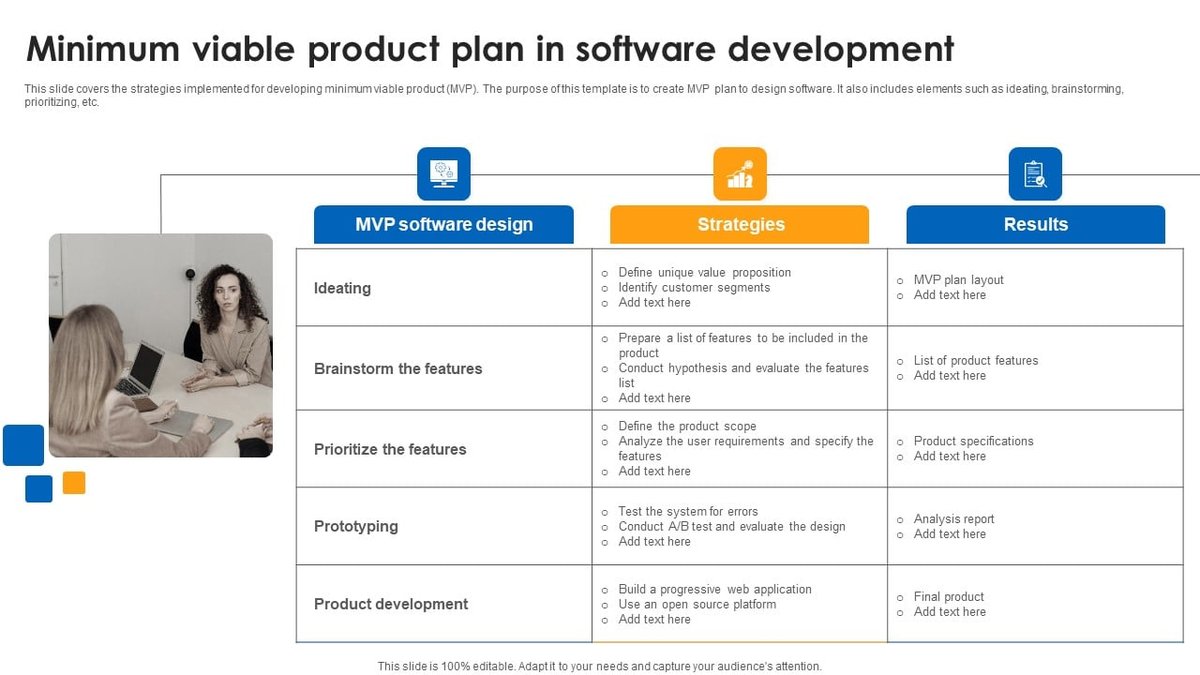
The notion of a Minimal Viable Product (MVP) isn't new, but its criticality has intensified. An MVP is a basic product version, containing only the essential features required to satisfy early adopters and initiate a feedback loop. It's not about being incomplete; it's about being focused. In an era where AI-driven solutions, lean methodologies, and digital-first funding models are paramount, the ability to rapidly iterate and validate is a startup's superpower.
Think about it: the market moves at warp speed. User expectations shift constantly. Waiting to build the "perfect" product is a recipe for irrelevance. By bootstrapping and focusing on an MVP, you bypass the common trap of over-engineering, preventing higher costs and longer development times that can cripple a nascent venture. This approach lets you quickly get something valuable into users' hands, gather crucial insights, and pivot or persevere with confidence.
Decoding the MVP Mindset: It's Not What You Think
Many founders misunderstand the "minimal" in MVP, equating it with "shoddy" or "half-finished." This couldn't be further from the truth. An MVP must still deliver core value and be user-friendly, even if it lacks all the bells and whistles of a mature product.
The true goal of an MVP is to:
- Validate your core hypothesis: Does the problem you're solving actually exist, and does your proposed solution address it effectively for a specific audience?
- Gather early adopter feedback: What do real users love? What frustrates them? What are their unmet needs?
- Minimize risk: By investing less time and money upfront, you reduce the potential loss if your initial assumptions are incorrect.
- Accelerate learning: Real-world usage data is far more valuable than theoretical market research.
Building an MVP is crucial for startups not just to validate ideas, but also to build momentum and attract investors who value data-driven progress over grand promises.
From Idea to Impact: Your Core Problem is Your North Star
Before you write a single line of code or design an elaborate wireframe, you need absolute clarity on the problem you're solving. This isn't just a casual thought; it requires deep empathy for your potential users and a rigorous questioning process.
Step 1: Identify Your Core Problem (Really Dig In)
Ask yourself: What specific pain point are you alleviating? Who experiences this pain, and how intensely? Is it a widespread issue, or a niche problem for a highly engaged group? Your solution must be a vitamin, not just a painkiller – something people need consistently, not just occasionally. Without a clear, well-defined problem, your MVP will wander aimlessly.
Step 2: Define Your Target Audience
Who are the early adopters most likely to experience this problem and be open to a new solution? Understanding their demographics, behaviors, and existing workarounds is key. These are the individuals whose feedback will shape your product's evolution.
Step 3: Sketch Your Simplest Solution
Once the problem and audience are clear, brainstorm the absolute minimum set of features required to solve that core problem for that target audience. This is where you ruthlessly cut anything that isn't essential. If a feature doesn't directly contribute to solving the primary problem or validating a core hypothesis, it doesn't make the MVP cut.
This initial phase is about asking "what if?" and getting very specific about "what must it do?"
Crafting Your MVP: Essential Features, Rapid Development
With your core problem identified, it's time to build. The good news for founders in 2025 is that building MVPs has never been faster or more accessible. You can now build MVPs in weeks, not months, thanks to a proliferation of no-code/low-code tools, modular development frameworks, and powerful APIs.
Focus on the "Must-Haves"
Resist the urge to add "nice-to-haves." Every extra feature means higher costs, longer development times, and increased complexity. If you're struggling to decide, use the "Job-to-be-Done" framework: What job is your user hiring your product to do? What's the simplest way to get that job done?
Leverage 2025's Tech Toolkit:
The startup landscape for 2025 emphasizes leveraging smart technologies:
- AI-driven UX: Seamlessly integrate AI to personalize user experiences or automate mundane tasks. Even in an MVP, thoughtful integration can showcase future potential. For deeper insights, explore the latest in AI-driven UX trends.
- Automated Chatbots: Deploy intelligent chatbots for customer support, onboarding, or even feature interaction within your MVP. This frees up human resources and provides immediate assistance.
- Personalized Recommendations: If applicable, even a basic recommendation engine can add significant value and demonstrate a path to future sophistication.
Launch a Basic Version:
Don't wait for perfection. Once you have a functional product that solves the core problem for your target audience, launch it. This might be a landing page with a waitlist, a simple web app, or even a specialized Slack bot. The goal is to get it into the hands of real users as quickly as possible.
Validating Your Vision: Data-Driven Evolution is Key
Launching your MVP is not the finish line; it's the starting gun. The real work begins as you gather feedback and iterate. This stage is non-negotiable for success.
Collect Feedback Relentlessly:
Your early adopters are gold. Engage with them through:
- User interviews: One-on-one conversations to understand their experience and pain points.
- Surveys: Quick questionnaires to gauge satisfaction and identify common issues.
- Analytics: Track user behavior within your product – where do they click, where do they drop off?
- Beta communities: Create a space for users to share ideas and issues with each other and your team.
Evolve Based on Real User Data, Not Assumptions:
This is perhaps the most critical insight. Your MVP must evolve based on real user data, not internal hunches or what you think users want. A/B testing, user stories, and consistent engagement with your early community will guide your product roadmap. Each iteration should be a response to validated feedback, improving the product incrementally and intelligently.
Validate Demand Before Scaling:
A common pitfall for startups is scaling too quickly based on initial enthusiasm rather than concrete demand. Always validate demand before investing heavily in scaling infrastructure, marketing, or team expansion. Small wins with early adopters should inform bigger moves. Can you consistently acquire users? Do they stick around? Do they derive measurable value? These are the questions to answer before hitting the accelerator.
Funding Your Growth: Beyond the Traditional Pitch in 2025
While bootstrapping pushes you to be lean, most startups eventually need external capital to scale. The funding landscape in 2025 offers innovative avenues beyond traditional venture capital, particularly for startups that have demonstrated early traction with an MVP.
Explore Digital-First Funding Models:
- DAO-based Crowdfunding: For Web3 startups, decentralized autonomous organization (DAO) crowdfunding is emerging as a powerful, community-driven funding mechanism. It allows a global network of individuals to pool resources and participate in a project's governance. To understand more about this model, look into decentralized autonomous organization (DAO) crowdfunding.
- Revenue-Based Financing (RBF): This model involves investors providing capital in exchange for a percentage of the company's future revenue until a certain multiple of the investment is returned. It's often non-dilutive and aligns investor interests directly with your revenue growth. For specifics, research revenue-based financing (RBF).
- Tokenized Equity: This involves representing company ownership as digital tokens on a blockchain, offering greater liquidity and accessibility for investors, especially in the Web3 space. The benefits of this approach are substantial, and you can learn more about tokenized equity models here.
These models offer flexibility and can be particularly attractive for bootstrapped companies that prioritize maintaining control and avoiding early dilution.
Mastering the Investor Pitch: Insights for 2025
When you're ready to seek investment, your MVP and the data you've collected from it will be your most compelling assets. Investors in 2025 want to see evidence, not just ambition.
Make Pitches Compelling with Simple Visuals and Storytelling:
Your pitch deck isn't just a collection of slides; it's a narrative. Use simple, clean visuals that highlight your product's impact and market opportunity. Weave a story around the problem, your solution (the MVP), the user journey, and the positive outcomes. Show, don't just tell. Demonstrate your MVP's functionality, even if it's basic.
Connect with Investors Strategically:
Networking remains key, but the channels are expanding.
- Attend startup events, hackathons, and investor summits: These provide invaluable face-to-face opportunities.
- Leverage platforms like LinkedIn and Twitter: Engage with investors in your industry, share your progress, and build relationships organically.
- AI-Driven Investor Matching: In 2025, tools like Clearco, PitchXO, and Hum Capital are revolutionizing investor outreach. These platforms use real-time data to match founders with investors whose thesis aligns with their startup, significantly increasing the efficiency and relevance of your outreach. This targeted approach is far more effective than generic cold emails.
Provide Investors with a Clear Roadmap for Fund Allocation:
Investors aren't just giving you money; they're buying into your plan. Be crystal clear about how you intend to use their funds. Will it be for product development (what features?), marketing (which channels?), or team expansion (which roles?). A well-thought-out, transparent roadmap builds trust and confidence.
Seek Investors Aligned with Your Vision:
Not all money is good money. Find investors who understand your industry, share your long-term vision, and can bring strategic value beyond just capital. An investor who challenges your assumptions productively and offers mentorship can be more valuable than one who simply writes a check.
Evolving Your Product: The Post-MVP Journey
Once your MVP has validated demand, collected significant feedback, and perhaps secured initial funding, it's time to strategically evolve. This isn't about adding every feature imaginable, but about expanding your product's capabilities based on a clear understanding of user needs and market opportunities.
Prioritize Features Based on Impact and Effort:
Use frameworks like the RICE scoring model (Reach, Impact, Confidence, Effort) or the MoSCoW method (Must-have, Should-have, Could-have, Won't-have) to prioritize new features. Focus on those that offer the highest impact for your users and your business, with reasonable development effort.
Continuous Iteration:
The lean methodology doesn't end with the MVP. It's an ongoing process of building, measuring, and learning. Regular updates, new features, and performance improvements should all be driven by data and user feedback.
Scalability Considerations:
As your user base grows, ensure your underlying technology can scale. This is where early architectural decisions matter. Thinking about future growth from the MVP stage, even in a minimal way, can save significant refactoring headaches down the line.
Common Myths About Bootstrapping and MVPs (Busted!)
Myth 1: Bootstrapping means you never raise money.
Reality: Bootstrapping means you start without external capital, using your own resources or early revenue. It instills discipline and capital efficiency, making you a more attractive investment candidate later on. Many successfully bootstrapped companies eventually raise strategic funding to accelerate growth.
Myth 2: An MVP is a buggy, unfinished product.
Reality: An MVP is a functional product that solves a core problem with minimal features. It should be polished enough to provide a positive user experience for its limited scope, not a shoddy prototype. Quality still matters.
Myth 3: You build an MVP once, then you're done.
Reality: The MVP is the start of a continuous learning and iteration process. It's a launchpad for feedback and subsequent product development, not a one-and-done deliverable.
Myth 4: If my MVP isn't instantly popular, my idea is bad.
Reality: Initial feedback might indicate a need for a pivot, not a complete abandonment. An MVP's purpose is to learn. Negative feedback or low adoption isn't failure; it's data telling you what not to build, or how to build something different.
Your Next Move: Building a Sustainable Future
The startup world of 2025 demands agility, data-driven decisions, and a relentless focus on solving real problems. By embracing bootstrapping and the MVP development philosophy, you're not just launching a product; you're building a learning machine designed for sustainable growth.
Start by defining that singular, compelling problem you're passionate about solving. Assemble the leanest possible solution, get it into the hands of your target users, and listen intently. Let their feedback guide your next steps, ensuring every feature, every pivot, and every investment decision is rooted in real-world validation. This iterative, user-centric approach is your most powerful tool for navigating the complexities of the startup journey and building a company that truly thrives.
For a deeper dive into all aspects of starting and scaling your venture, Explore our main guide.